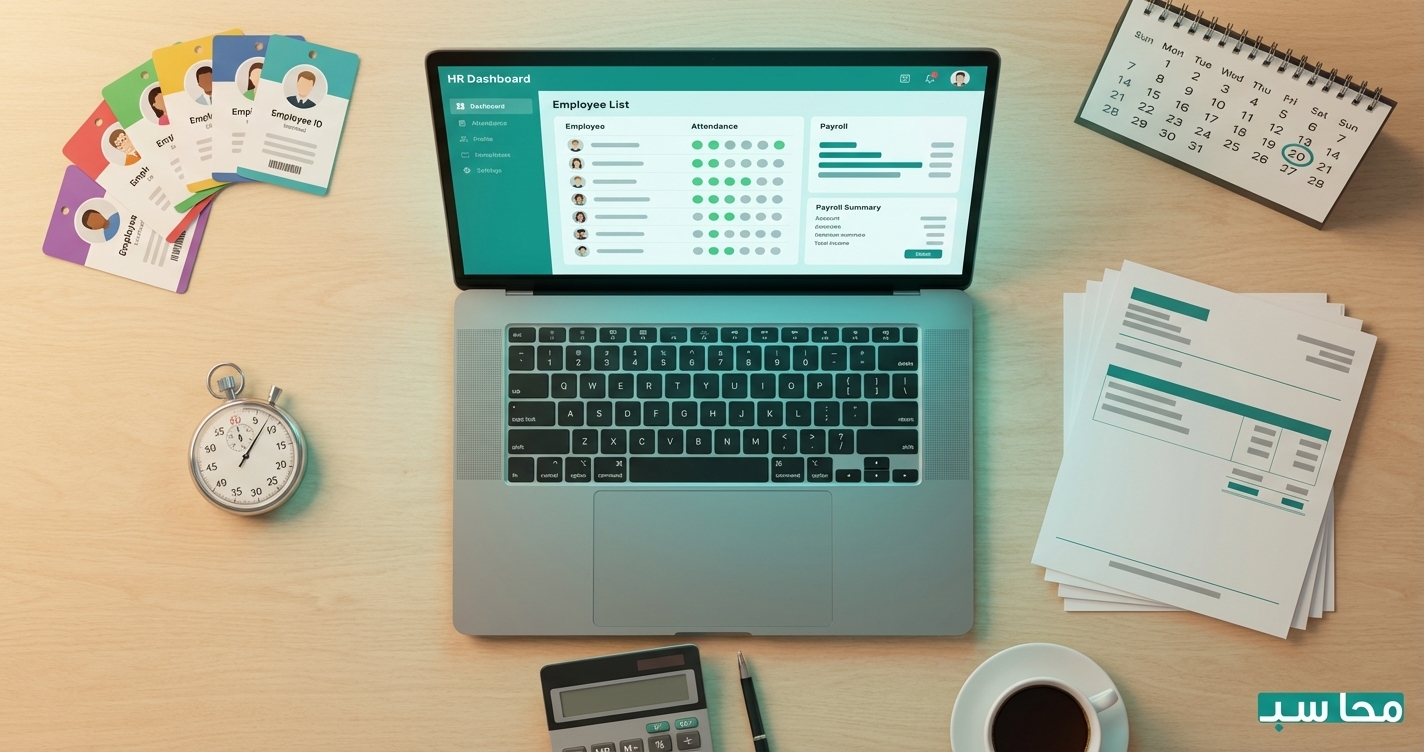
Employees are the greatest asset of any company. Managing them efficiently — from attendance tracking to payroll and leave management — directly impacts productivity, job satisfaction, and costs. This guide explains how to build a complete HR system even if you run a small business.
Components of a Complete HR Management System
1. Attendance Tracking System
Accurately tracking every employee's working hours is the first step. Attendance can be recorded via time-punch, PIN code, or mobile app with geo-fencing. The system automatically calculates overtime, tardiness, and absences.
2. Schedules and Shift Management
For businesses operating with shifts (morning/evening/night), the system lets you create weekly or monthly schedules, assign employees to shifts, and verify complete coverage for all periods. Employees receive notification of their schedules in advance.
3. Leave and Absence Management
Define available leave types (annual, sick, emergency, unpaid) and the number of days allowed for each. Employees submit leave requests electronically, which supervisors review and approve or reject. The system tracks each employee's leave balance and updates it automatically.
4. Payroll Processing
Payroll calculation is among the most sensitive tasks. The system takes into account:
- Base salary and actual working days/hours
- Allowances (housing, transport, phone)
- Overtime pay at a multiplied rate
- Deductions for tardiness and absences
- Penalties and bonuses
- Social insurance and tax withholdings (by country)
The result: a clear, detailed payslip for every employee.
5. Access Permissions and Job Roles
Not all employees need the same permissions. A branch manager needs a different view than a cashier, and a cashier needs different permissions than an accountant. The system lets you define precise roles for each job function and assign employees to those roles.
The Importance of HR, Payroll, and Accounting Integration
When these systems are separate, you need to enter data manually multiple times — causing errors and consuming time. In Mohaseb, everything is connected: attendance feeds payroll calculation, and payroll automatically creates accounting journal entries in expense accounts.
How to Build an Effective HR Policy for Your Small Business
- Document policies: Create an employee handbook clarifying working hours, leave policy, and penalties and rewards.
- Implement a digital system: Move away from paper and manual spreadsheets.
- Be consistent: Apply policies equally to everyone.
- Review performance periodically: Quarterly reviews help employees develop and reduce turnover.
Companies adopting integrated digital HR systems save up to 8 hours weekly on employee-related administrative tasks.
Conclusion
An integrated HR management system isn't exclusive to large companies. Even small businesses benefit from automating attendance, leave management, and payroll processing. With Mohaseb, you get a complete HR system fully integrated with accounting and POS in one platform.