
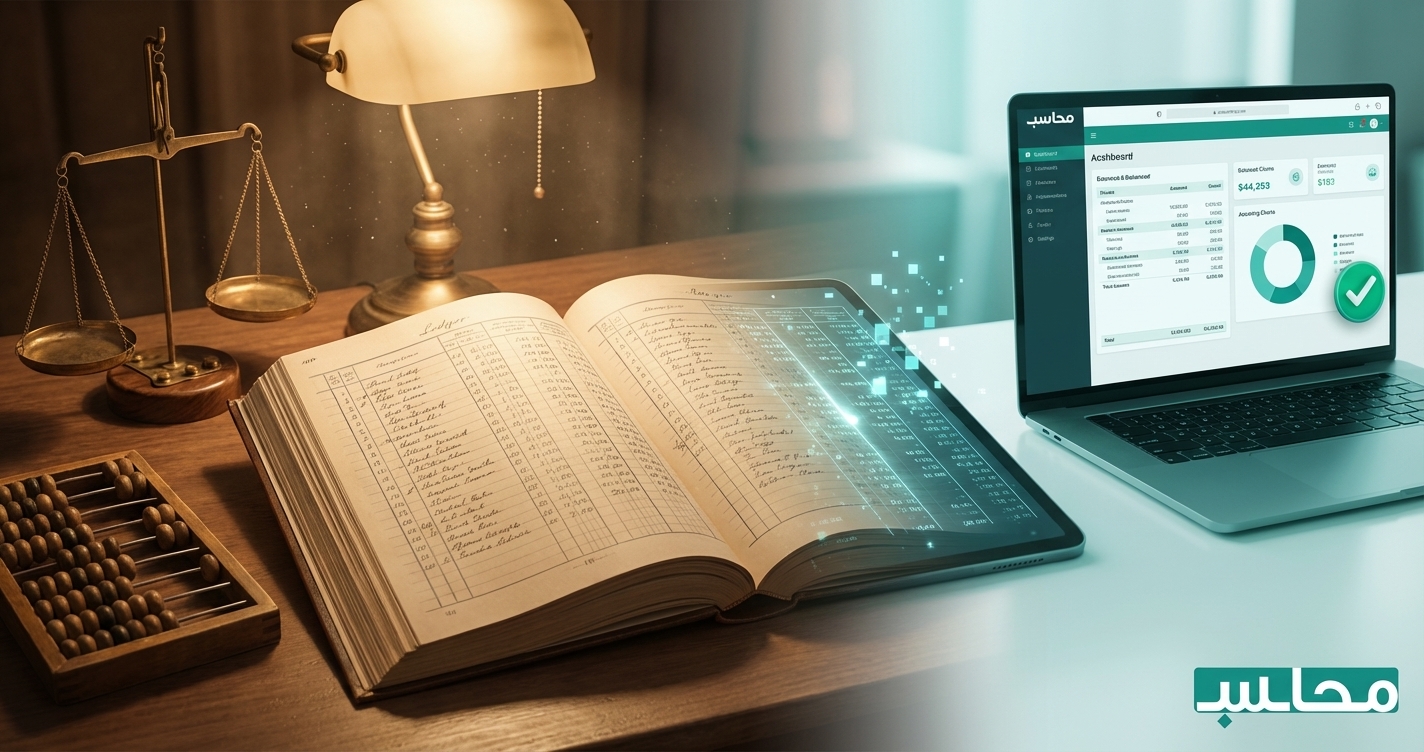
Financial accounting is the language of business. Without understanding its fundamentals, it becomes difficult to make sound financial decisions or even know whether your company is actually profitable. This guide simplifies core accounting concepts for small and medium business owners.
Why You Need to Understand Accounting
Many business owners rely entirely on their accountants without understanding what's happening. This is a real risk. Understanding the basics lets you monitor your company's financial health, identify problems early, and discuss numbers confidently with investors or banks.
Double-Entry Bookkeeping: The Golden Rule of Accounting
Modern accounting is based on the double-entry principle: every financial transaction affects at least two accounts — one debit and one credit — and total debits always equal total credits.
Example: Selling goods for $1,000 in cash:
- Debit: Cash account +$1,000
- Credit: Sales account +$1,000
This system ensures record accuracy and makes manipulation of numbers extremely difficult.
Chart of Accounts: Your Company's Accounting Structure
The chart of accounts is an organized list of all accounts your company uses. It's typically divided into:
- Assets: What the company owns — cash, inventory, equipment, real estate.
- Liabilities: What the company owes — loans, unpaid bills.
- Equity: The owner's share in the company.
- Revenue: Income from sales and services.
- Expenses: Operating costs — rent, salaries, materials.
The Three Essential Financial Statements
1. Income Statement (P&L)
Answers the question: did your company make a profit? It shows revenue, subtracts cost of goods sold and expenses to arrive at net profit (or loss). Prepared monthly and annually.
2. Balance Sheet
A snapshot of financial position at a specific moment. Answers: what does the company own? What does it owe? What is equity worth? The fundamental equation: Assets = Liabilities + Equity.
3. Cash Flow Statement
Tracks actual cash movement in and out of the company. A company can be profitable on paper while suffering a cash crunch. This statement reveals that and helps plan for liquidity.
Receipt and Payment Vouchers
Receipt Voucher: A document proving receipt of funds from a customer or any party. Generates an accounting entry increasing cash and recording revenue or reducing accounts receivable.
Payment Voucher: A document proving payment to suppliers or for operating expenses. Generates an entry decreasing cash and recording the expense or reducing accounts payable.
How Mohaseb Simplifies Accounting for Business Owners
You don't need to be a specialized accountant to use Mohaseb. The system automatically generates accounting entries from every sale, purchase, or payment. Financial reports are ready at the click of a button. And if you want more depth, you'll find a complete, flexible chart of accounts that can be fully customized.
Business owners who review their income statements monthly discover savings opportunities averaging 12% of annual operating costs.
Conclusion
Accounting isn't complex when you understand the basics. Start with double-entry bookkeeping, then the chart of accounts, then the three main financial statements. With Mohaseb, all of this happens automatically while you focus on growing your business.